
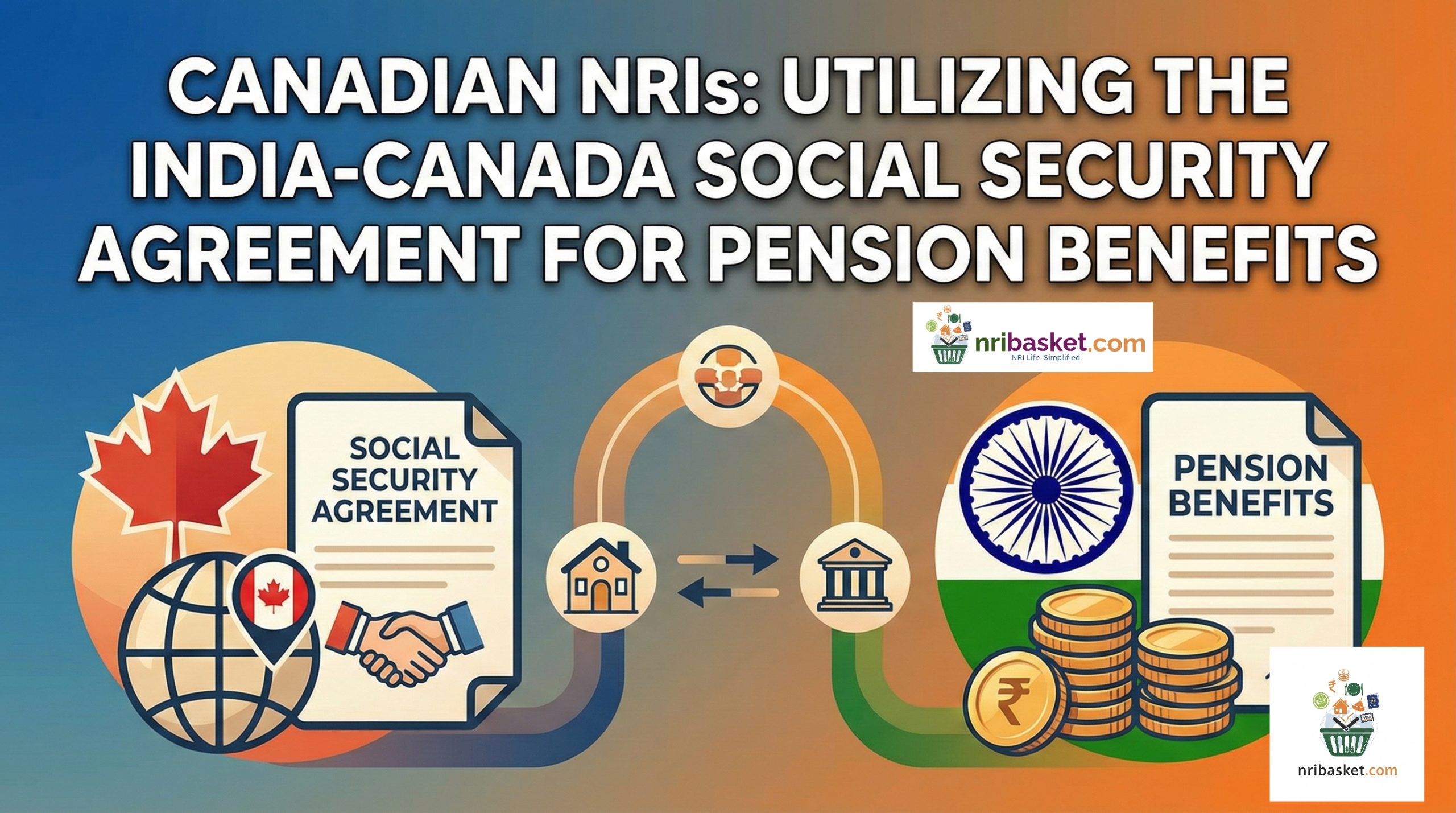
Canadian NRIs: Utilizing the India-Canada Social Security Agreement for Pension Benefits
Canadian NRIs: Utilizing the India-Canada Social Security Agreement for Pension Benefits
Discover how the India-Canada Social Security Agreement benefits Non-Resident Indians (NRIs) by preventing double contributions and allowing for the aggregation and portability of pension benefits between the two countries.
Introduction
For Non-Resident Indians (NRIs) who have lived and worked in both Canada and India, navigating the complexities of social security and pension benefits can be a significant concern. The India-Canada Social Security Agreement (SSA), which came into effect on August 1, 2015, offers a streamlined approach to ensure individuals receive the pension benefits they are entitled to from both countries. This agreement aims to eliminate double contributions, facilitate the aggregation of contribution periods, and ensure the portability of benefits, ultimately safeguarding the retirement security of those who have contributed to the social security systems of both nations.
Frequently Asked Questions about the India-Canada Social Security Agreement
Long Answer: Signed on November 6, 2012, and effective from August 1, 2015, the SSA is a crucial agreement designed to prevent individuals from losing their social security contributions or pension benefits when they move between India and Canada. It ensures that periods of contribution or residence in one country can be recognized by the other, helping individuals meet eligibility criteria for various pension benefits.
Long Answer: The SSA was signed on November 6, 2012, during a state visit by then-Prime Minister Stephen Harper to India. Its entry into force was announced in April 2015 during Prime Minister Narendra Modi’s official visit to Canada, with the effective date being August 1, 2015.
Long Answer: The SSA aims to achieve three key objectives:
Elimination of Double Coverage (Detachment): This prevents individuals and their employers from having to contribute to the social security systems of both countries for the same work. For instance, an Indian employee deputed to Canada for up to 60 months can be exempted from Canadian social security contributions if they continue to contribute to India’s system.
Totalization of Contribution Periods: The agreement allows for the combining of periods of contributions or residence in both countries to meet the minimum eligibility requirements for pension benefits.
Portability of Benefits (Exportability): Individuals can receive their pension benefits even if they reside in the other country or a third country.
Long Answer: The SSA coordinates Canada’s CPP, which provides retirement, disability, and survivor benefits based on contributions, and the OAS program, which offers a basic monthly pension to most Canadians aged 65 and over based on residency.
Long Answer: The Indian programs included in the SSA are the Employees’ Pension Scheme (EPS), 1995, which is similar to the CPP and covers many employed persons in India. Additionally, the agreement can help individuals obtain a lump-sum payment or refund of contributions from the Employees’ Provident Fund Scheme (EPFO), 1952, and the Employees’ Deposit-Linked Insurance Scheme (EDLI), 1976.
Long Answer: The SSA applies to individuals who have contributed to or been covered by the social security systems of both India and Canada. This includes those who have worked in both countries and their eligible survivors who may claim benefits.
Long Answer: Under the “detachment” clause of the SSA, if an Indian employee is sent by their employer to Canada for a temporary period (generally up to 60 months), they can be exempted from contributing to Canada’s social security system. This exemption is granted if they continue to be covered and contribute to India’s social security system and obtain a Certificate of Coverage from the Employees’ Provident Fund Organization (EPFO) in India. The same principle applies to Canadian employees temporarily working in India. This prevents employers and employees from incurring unnecessary costs by contributing to two systems simultaneously.
Long Answer: Many pension programs require a minimum number of contribution years or periods of residence to qualify for benefits. If an individual has not accumulated enough periods in one country to qualify, the SSA allows for “totalization.” This means that the periods of contribution or residence in India can be added to those in Canada (and vice versa) to help meet the eligibility thresholds for retirement, disability, or survivor benefits. For example, if you don’t qualify for a CPP benefit based solely on your Canadian contributions, India’s EPS contributions may be considered. Similarly, Indian EPS may consider Canadian CPP contributions and periods of residence in Canada to determine eligibility for Indian old age benefits.
Long Answer: Before the SSA, individuals might have faced challenges receiving their pension benefits if they moved permanently from one country to the other. The portability clause ensures that once an individual is deemed eligible for benefits under the SSA, those benefits can be paid to them regardless of their country of residence. This provides greater financial security for NRIs in their retirement years.
Long Answer: The SSA is designed to coordinate the pension systems, not replace them. Therefore, if you meet the eligibility criteria through totalization or by sufficient contributions in each country, you can receive separate pension benefits from both Canada and India. Each country will pay a benefit amount reflecting the portion of your creditable periods under its own pension program.
Long Answer: For Canadian benefits, the SSA can help you qualify for the Canada Pension Plan (retirement, disability, and survivor benefits) and the Old Age Security program (old age pension). For Indian benefits, it assists in qualifying for old age, permanent total disability, and survivor pensions under the Employees’ Pension Scheme (EPS), 1995.
Long Answer: For employees deputed for short-term assignments, the COC is essential. In India, the Employees’ Provident Fund Organization (EPFO) issues this certificate. It serves as proof that the employee is actively contributing to their home country’s social security scheme, allowing them to avoid making contributions to the social security system of the country where they are temporarily working.
Long Answer: Under the detachment clause, employees on temporary assignments can typically be exempted from social security contributions in the host country for up to 60 months. In some cases, it may be possible to extend this period, but this usually requires specific approval and adherence to further conditions.
Long Answer: The SSA’s provisions for totalization and eligibility for Indian benefits rely on your valid contributions to the Employees’ Pension Scheme (EPS). If you have already withdrawn your contributions as a lump sum, those periods can no longer be used to qualify for a regular pension under the EPS, even with the SSA.
Long Answer: Service Canada provides specific application forms (e.g., ISP-5054-IND for Old Age, Retirement, and Survivor Benefits) for individuals residing in India to apply for Canadian benefits like the Old Age Security Pension or Canada Pension Plan benefits. It’s crucial to complete these forms accurately and provide all requested documentation to avoid delays.
Long Answer: Service Canada assists individuals residing in Canada with applying for Indian benefits under the EPS, 1995. This typically involves completing specific application forms for Indian old age, disability, or survivor pensions. It is important to note that if you have not received a lump-sum withdrawal of your EPS contributions, the agreement can help you qualify for monthly benefits.
Long Answer: While specific requirements may vary, generally you will need to provide documentation such as proof of your identity, evidence of your periods of residence in Canada, and records of your contributions to the Canada Pension Plan and/or the Indian Employees’ Pension Scheme. It is often recommended to send certified true copies of documents rather than originals, and Service Canada can sometimes certify copies for free.
Long Answer: Canada Pension Plan (CPP) retirement benefits are payable worldwide, regardless of where you live. However, Old Age Security (OAS) benefits generally require you to have lived in Canada for at least 20 years after age 18 to receive them outside the country. If you don’t meet this residency rule, and the SSA with your current country of residence doesn’t allow for totalization of residence periods to meet OAS eligibility, your OAS payments might cease or be reduced.
Long Answer: One of the core benefits of the SSA is to prevent the loss of benefits due to insufficient contribution periods in a single country. If you have not contributed for the minimum required period in either India or Canada to qualify for a pension benefit, the agreement allows you to combine your creditable periods from both countries. This combined period can then be used to determine your eligibility for pro-rated benefits from each country.
Long Answer: For Canadian companies, the SSA offers significant savings and enhanced competitiveness. By ensuring that their employees temporarily working in India can continue contributing to the CPP and be exempt from comparable Indian pension programs, it avoids the burden of double social security contributions. This streamlined approach makes it more efficient and cost-effective for businesses to operate internationally.
Long Answer: Similar to Canadian companies, Indian businesses benefit from the “detachment” provision. If an Indian employee is temporarily assigned to Canada, the Indian company can continue contributing to India’s social security system on their behalf. With a Certificate of Coverage, the employee and the company are then exempt from making social security contributions in Canada for the assignment period, typically up to 60 months. This helps reduce costs and administrative burdens for Indian companies operating in Canada.
Long Answer: If you have contributed to the Canada Pension Plan and/or the Indian Employees’ Pension Scheme (EPS) and become disabled, the SSA can help you meet the eligibility criteria for disability pensions from either country. For instance, for Canadian CPP disability benefits, your contributions to the Indian EPS might be considered if you don’t have enough Canadian contributions. Similarly, for Indian invalidity benefits, India may consider periods of contribution to the CPP as creditable periods under the EPS.
Long Answer: The SSA ensures that the surviving spouses, common-law partners, and dependent children of individuals who contributed to the social security systems of both Canada and India can qualify for survivor benefits. This means that if a person who contributed to both the CPP and EPS passes away, their eligible survivors may receive benefits from either or both countries, based on the totalized contribution periods.
Long Answer: The agreement defines “creditable period” for both Canada and India. For Canada, this includes periods of contribution to the Canada Pension Plan and periods of residence for the Old Age Security Act. For India, it refers to periods of contributions or insurance recognized under its legislation. The SSA specifies how these periods are treated for totalization purposes, for example, a calendar year with at least three months creditable under Indian legislation may be considered a creditable year under the Canada Pension Plan.
Long Answer: While the immediate examples often focus on employed individuals, self-employed persons can also take advantage of the SSA to avoid double contributions. For a self-employed person to receive a Certificate of Coverage from Canada, they must generally be considered a resident of Canada under the Income Tax Act while the certificate is being requested. This ensures that they continue to contribute to their home country’s social security system and are exempt from contributions in the host country for temporary work.
Long Answer: A reciprocal agreement means that both countries grant similar benefits and considerations to citizens of the other country. So, the benefits and exemptions available to Canadian citizens and companies in India are generally mirrored for Indian citizens and companies in Canada under the terms of the SSA.
Long Answer: The Employees’ Provident Fund Organization (EPFO) has been designated as the competent institution in India for the application of the SSA. This means EPFO is responsible for administering the provisions of the agreement related to Indian social security schemes, including issuing Certificates of Coverage to Indian employees temporarily working in Canada.
Long Answer: Service Canada administers Canada’s social security programs and is responsible for implementing the Canadian side of the SSA. They handle applications for Canadian benefits under the agreement and also coordinate with Indian authorities when individuals in Canada apply for Indian benefits.
Long Answer: The “exportability” provision of the SSA facilitates the transfer of accumulated social security contributions. This means that if you have made contributions to the social security system of one country and then relocate permanently to the other, the agreement can help you access or transfer those accumulated contributions, ensuring that your contributions are not lost.
Long Answer: For comprehensive and up-to-date information, individuals should refer to the official government websites. In Canada, Service Canada (canada.ca) provides Long guides and application forms related to international social security agreements. In India, the Employees’ Provident Fund Organization (epfindia.gov.in) offers information on the Indian perspective of the agreement. Additionally, it is always advisable to consult with a financial advisor or an expert in international social security for personalized guidance based on your specific circumstances.
India-Canada Social Security Agreement, NRI pension, Canadian pension benefits, Indian pension benefits, social security for NRIs, detachment, totalization, portability, Canada Pension Plan, Old Age Security, Employees’ Pension Scheme, EPFO, Service Canada